Many companies have previously addressed security through tools, policies, and individual projects. NIS2 requires a different mindset. Security becomes a continuous operational discipline. What matters is not only whether measures exist, but whether they are effective, applied consistently, and capable of withstanding scrutiny in the event of an incident.
Network Analysis
![[Translate to English:] NIS2 Gebäudenetzwerk](/fileadmin/_processed_/3/0/csm_NIS2_gebaudenetzwerk_1_cd67b3bd24.jpg "[Translate to English:] NIS 2Gebäudenetzwerk")
23
Feb
2026
Feb
2026
NIS2 Explained Clearly – From Directive to Practical Implementation
Legal Basis and Scope
NIS2 is an EU directive aimed at strengthening cybersecurity across sectors and applies to significantly more organizations than the previous KRITIS regulation. As a general rule, organizations with 50 or more employees or annual turnover exceeding 10 million euros are affected if they operate in defined essential or important sectors. This brings many medium-sized companies under binding security requirements for the first time.
What NIS2 Requires in Practical Terms
The directive does not prescribe specific products. It defines outcome-based requirements.
Risks must be systematically assessed. Security incidents must be detected, classified, and reported within defined timeframes. Security measures must be documented and verifiable.

Time is a critical factor. Reporting deadlines assume that relevant events are recognized as incidents in the first place. Without a reliable data foundation and consistent logging, valuable time is lost reconstructing events instead of responding to them.
A central element of the directive is the three-stage reporting process for significant cybersecurity incidents:
- Within 24 hours, an initial early warning must be submitted to the competent authority.
- Within 72 hours, a detailed incident report including impact assessment and initial mitigation measures must follow.
- Within one month, a final report including root cause analysis and long-term corrective actions must be submitted.
These tight deadlines clearly demonstrate that NIS2 does not require perfect real-time clarification, but rather a rapid, structured response based on reliable information.
The Overlooked Layer – Network Infrastructure and Cabling
Although NIS2 does not explicitly reference specific cabling standards, network infrastructure becomes indirectly security-relevant. The directive requires physical security, resilience, and traceability of critical systems. This includes technical rooms, distribution cabinets, patch panels, cable routes, and access controls.
Copper and fiber networks are often single points of failure. OT networks, IoT components, and PoE-based systems are also security-critical because they are directly connected to production or building functions. Missing or insufficient measurements represent unknown risks in this context.
NIS2 also requires an appropriate level of resilience. Redundant paths only provide value if they are tested, documented, and operationally traceable.
Practical Steps for Organizations
Organizations must:
- Create visibility. Identify all active systems, devices, and network connections.
- Verify quality. Ensure networks and cabling measurably meet planned specifications.
- Detect risks early. Deviations, disruptions, or unusual communication patterns must be visible in a timely manner.
- Document measures. Results from measurement, analysis, and operations must be recorded in a traceable way.
From Directive to Practice – Logging as the Key
In complex IT and OT environments, log data is generated at many points. Only through centralized aggregation, filtering, and correlation does this data form a usable situational overview. Typical weaknesses include incomplete logging, missing time synchronization, or non-correlatable datasets.
Where Traditional Logs End – Why Measurement and Network Analysis Matter
Many organizations log servers and applications. This is necessary but not sufficient. In heterogeneous IT and OT environments, relevant events occur at the network layer. Network analysis reveals how systems interact. Measurement technology provides objective data about the quality and integrity of the infrastructure.
If you do not measure, you do not know. If you do not know, you cannot prove compliance. NIS2 does not demand perfect technology. It demands control over the entire IT and OT network.

NetPeppers Solutions for NIS2
Contribution of NetPeppers solutions to NIS2 implementation
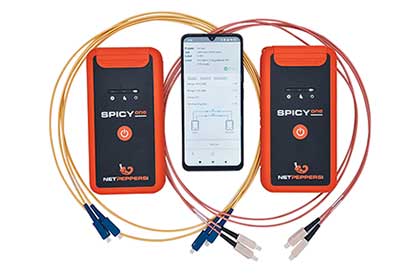
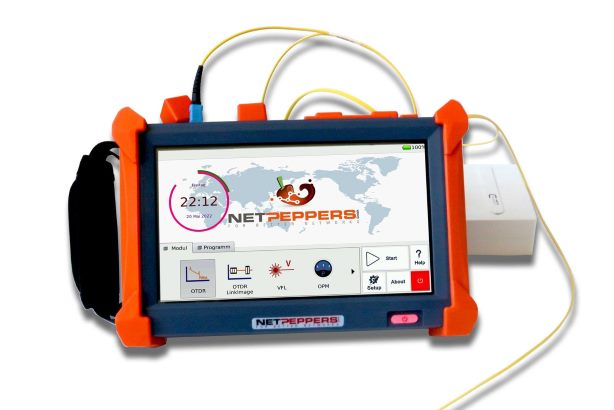
NetPeppers’ analysis, measurement, and monitoring solutions support organizations in implementing parts of the NIS2 requirements in a practical way. They provide transparency across network infrastructure, enable detection of security-relevant events at the network layer, and deliver reliable measurement results for documentation and audits.
These solutions contribute to logging and traceability in line with OPS 1.1.5, without replacing traditional log management or SIEM concepts.
Download our flyer to see a concise overview of which NetPeppers solutions specifically support NIS2 implementation.

Documentation as a Line of Defense
NIS2 makes demonstrability mandatory. Structured measurement, analysis, and logging data reduce discussions during audits and accelerate decision-making during incidents.
Documentation is not only relevant for auditors. It is an operational tool that helps realistically assess resilience and the effectiveness of security measures.

Practical Recommendations for NIS2 Implementation
- Inventory and document network infrastructure.
- Regularly measure and test copper and fiber links.
- Include OT and IoT components in security assessments.
- Ensure centralized logging and time synchronization.
- Document measurement results, analyses, and corrective actions in an audit-proof manner.
Conclusion
NIS2 is not purely an IT project. It is a test of operational capability. Organizations that systematically assess risks, quickly classify incidents, and document measures in a traceable manner not only increase their resilience but also meet regulatory requirements with substance.