Oct
2026
Cable Testers Compared: Features and Device Generations
What are the differences between cable testers?
Cable testers differ significantly in their range of functions. For clarity, they can be divided into three levels. These are not standardized device classes, but rather a classification based on their respective functions.
Within each level, different device generations can be distinguished. While the level describes the testing and measurement functions a cable tester provides, the generation refers to how these functions are technically implemented and how the results are displayed or processed.
What types of cable testers are available?
Cable testers can be divided into three levels based on their functionality: basic wiremap testers for checking conductor assignments, devices with additional length measurement capabilities, and cable testers with advanced functions such as PoE testing and resistance measurement. Within these levels, device generations differ primarily in how faults are displayed and how test results can be processed digitally.
Level 1: Checking wiring
The focus is on basic cable wiring verification.
Level 2: Locating faults and processing results
Additional functions such as length measurement complement basic wiremap testing. Modern devices can also digitally document and process test results.
Level 3: Advanced cabling and PoE analysis
Wiremap and length measurements are supplemented by PoE testing and more advanced analysis functions.
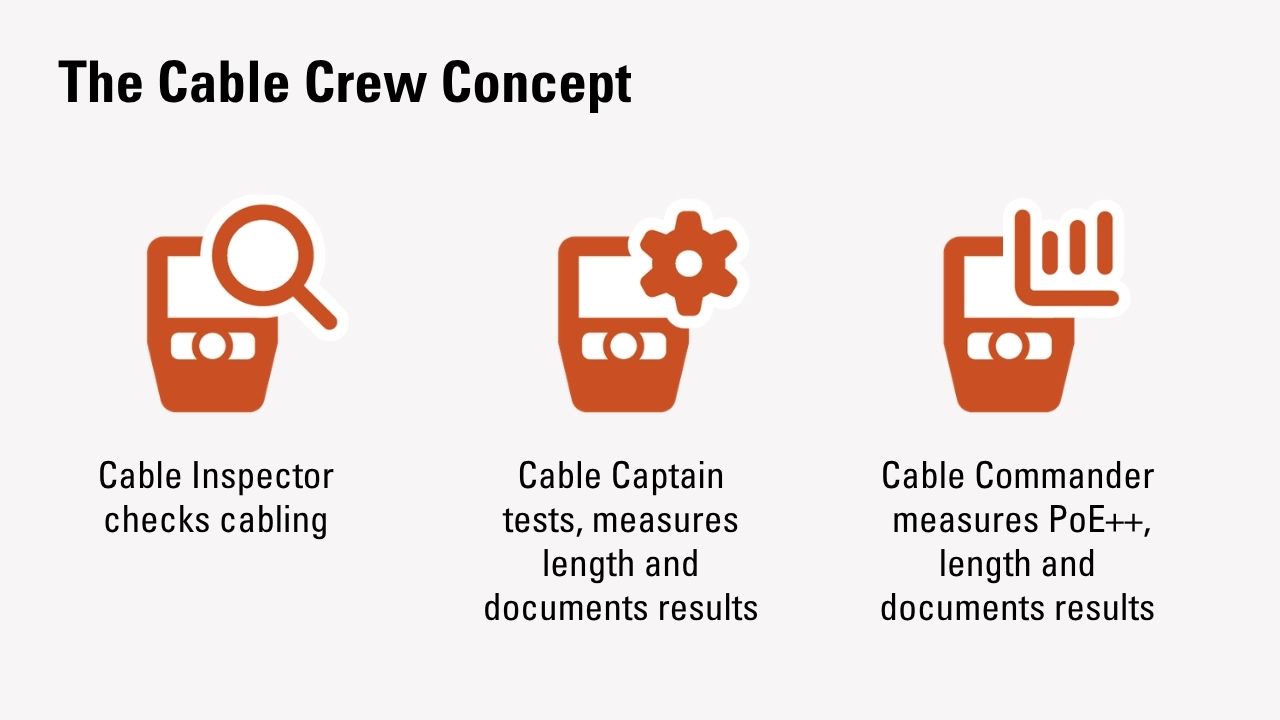
The NetPeppers Cable Crew meets these different requirements with three devices: Cable Inspector, Cable Captain and Cable Commander. Their capabilities range from basic wiremap testing and length measurement to digital documentation, PoE testing and resistance analysis. Cable Captain and Cable Commander can also be integrated into digital testing and documentation workflows via the NP Connect app.
As the range of functions increases, so does the price in most cases. Traditional wiremap testers are available in the entry-level segment for up to approximately €80. Testers with length measurement capabilities can cost several hundred euros. Devices with advanced features such as PoE testing and additional network tests can cost up to approximately €1,000.
The Cable Crew offers a comparatively low price point combined with a broad range of functions. Even the Cable Commander, with its recommended retail price, remains well below the €1,000 mark.
Level 1: From LED Wiremap Testers to Graphical Wiremaps
The basic task of a wiremap tester is to check the eight conductors of a twisted-pair Ethernet cable. This includes detecting open circuits, miswires and short circuits.
There are significant differences in how faults are detected and displayed.
LED vs. LCD Cable Testers: How Do They Differ in Fault Detection?
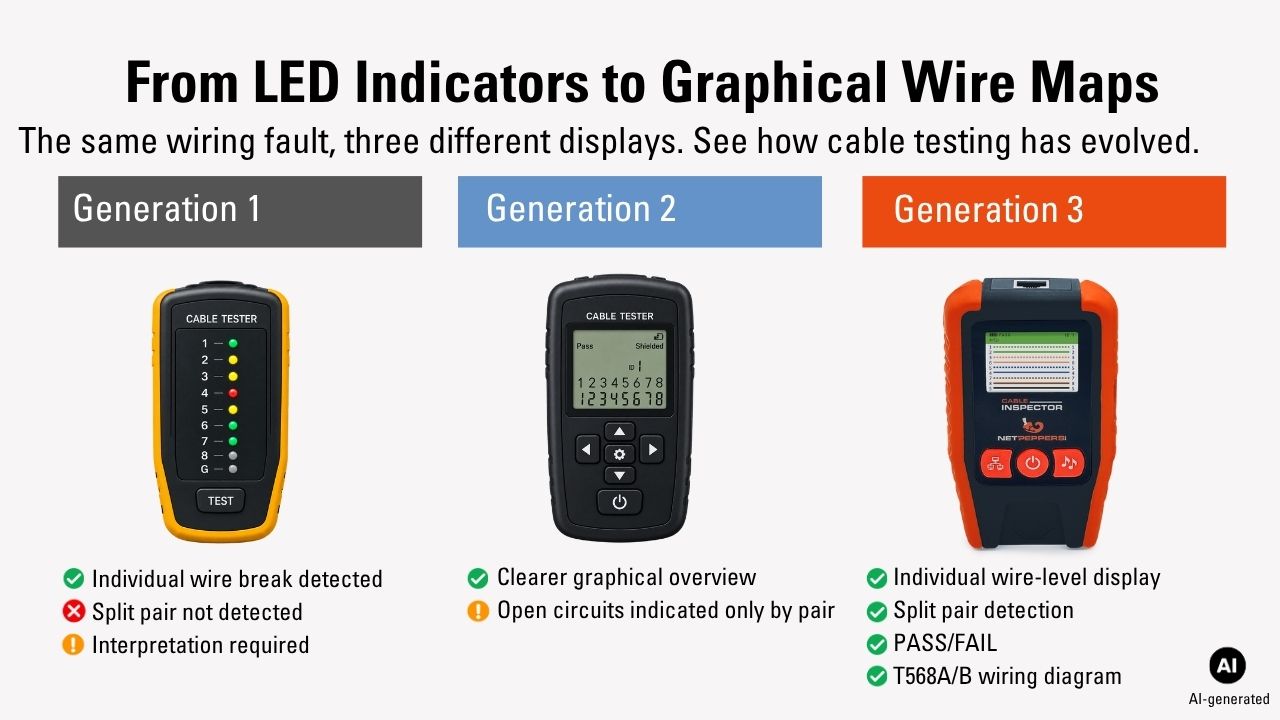
Traditional Generation 1 LED testers display the wiremap through LEDs that light up sequentially. Users must interpret the LED sequence and assign the signals to the individual conductors. This can quickly become confusing when dealing with more complex wiring faults.
Traditional LED testers cannot detect split pairs. The wiring may appear correct at first glance, even though the conductors are not assigned to the intended pairs. As a result, the cable link may experience transmission problems despite an apparently correct indication.
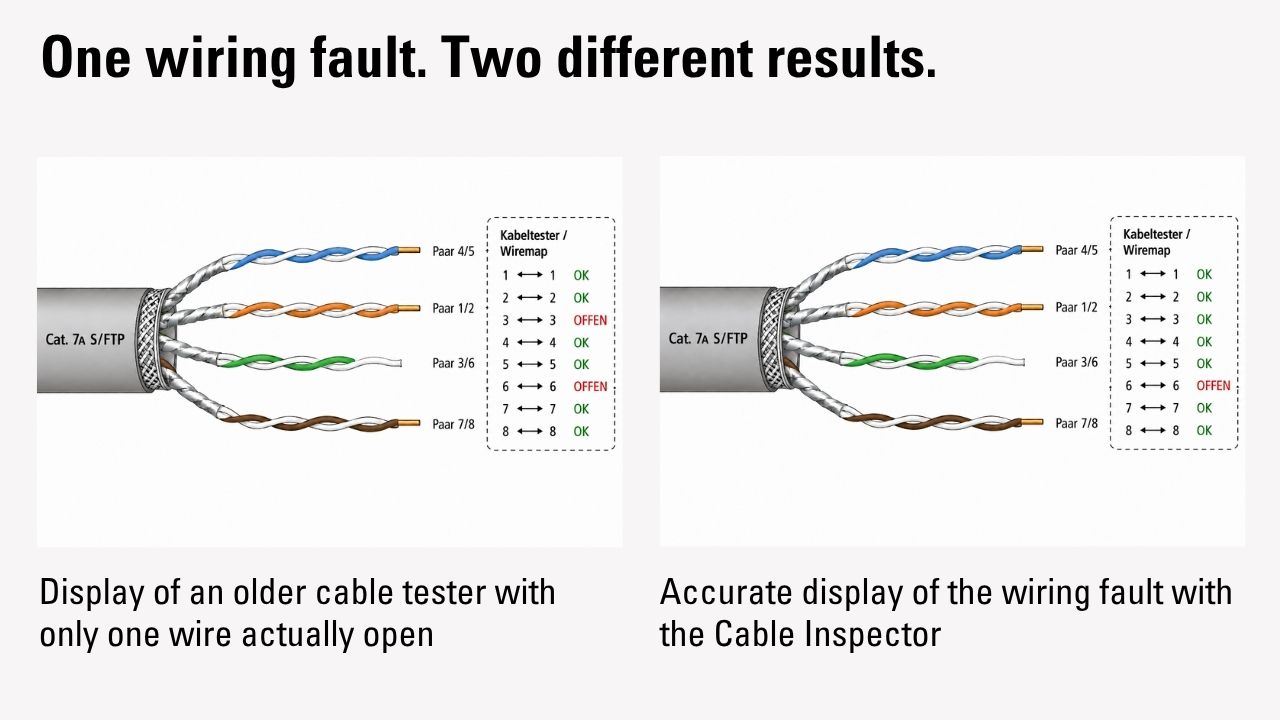
However, LED testers have one advantage over monochrome LCD testers when it comes to fault localization: they can identify an open circuit in an individual conductor within a pair.
Generation 2 wiremap testers with monochrome LCD displays make it easier to visually interpret the wiremap. However, they do not offer the individual-conductor accuracy of LED testers. If only one conductor is open, the fault is indicated for the entire wire pair. This means the affected conductor cannot be identified directly, making fault localization more time-consuming.
Cable Inspector: Graphical, Color-Coded and Accurate Down to Individual Conductors
The Cable Inspector (Generation 3) combines a graphical wiremap display with fault indication for individual conductors.
The wiremap is displayed graphically and in color according to the T568A or T568B wiring scheme. The device detects split pairs, short circuits and open circuits and indicates the result as PASS/FAIL.
An open circuit in a single conductor can also be displayed graphically. Users no longer need to mentally translate LED sequences or numerical displays into a wiremap. More complex faults involving multiple miswires or open conductors are easier to identify and understand.
The difference therefore lies not only in the color display, but primarily in how clearly and precisely wiring faults are presented.
Level 2: From Length Measurement to Digital Workflows
Traditionally, testers in this segment, priced at up to several hundred euros, have been characterized primarily by their cable length measurement capabilities. Typical Generation 2 features include displaying the lengths of individual wire pairs and supporting additional cabling systems such as coaxial cables or RJ11/12 telephone wiring.
The Cable Captain belongs to Generation 3 of this functional level. It also supports length measurement and various cabling systems. However, the key advancement is the digital documentation and further processing of test results via the NP Connect app.
Cable Testers with an App: Digital Documentation of Test Results
Documenting test results is a standard feature of higher-priced cable qualifiers and certifiers. In the lower-priced cable tester segment, however, this capability is less common.
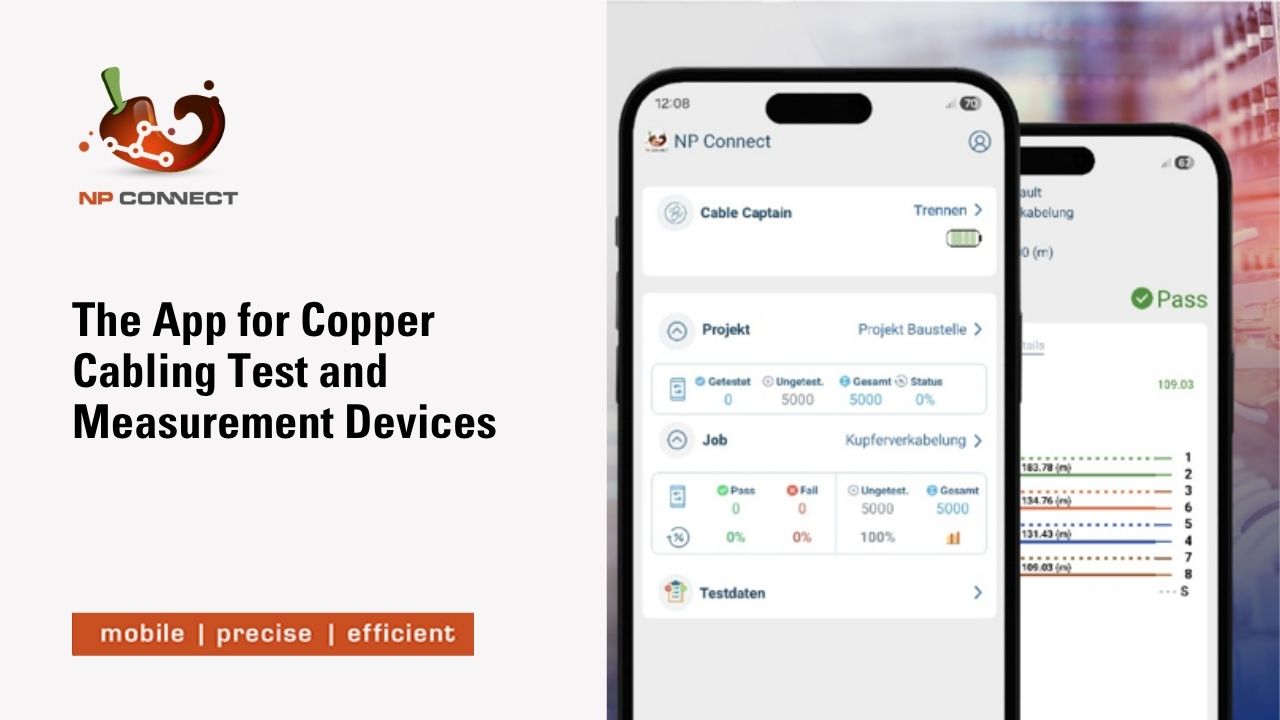
The Cable Captain uses the NP Connect app for this purpose. This makes digital documentation functions available to a Generation 3 cable tester within Level 2.
This creates a seamless workflow:
Prepare project → Test cable → Record results → Save and synchronize → Generate report
NP Connect also supports cloud-based user management with individual roles and permissions. Test results can be stored centrally and synchronized with Google Drive or Microsoft OneDrive. PDF reports can be generated and shared. PDF and CSV reports are also available for the Cable Captain. Firmware updates can be installed over the air (OTA).
The key difference between the generations therefore goes beyond individual additional functions. While Generation 2 primarily provides additional measurement data, such as cable length, Generation 3 extends cable testing to include digital documentation and further processing of test results.
Level 3: When Wiremap Testing Alone Is Not Enough
At this level, where device prices can reach approximately €1,000, cable testing is supplemented by more advanced analysis functions. Depending on the device, these may include active network tests such as VLAN detection or Ethernet link speed determination, PoE testing, and additional measurement and documentation functions.
The Cable Commander takes a different approach within this level, focusing more strongly on testing passive cabling and assessing its suitability for PoE applications.
Measuring DC Loop Resistance: Why Is It Important for PoE?
The Cable Commander offers comprehensive Power over Ethernet (PoE) testing. It displays detailed information on voltage, power, class, type, standard and polarity, supporting standards up to IEEE 802.3bt (PoE++).
It also provides DC loop resistance testing for each wire pair. This helps identify additional installation faults and assess potential problems with PoE power delivery.
This measurement function is more commonly associated with cable certifiers and offers two key advantages:
- Poor conductor terminations at connectors can be detected directly. Such faults are not necessarily identified by basic wiremap testing and may subsequently cause a cable link to fail, for example if a module or outlet is moved.
- Increased conductor or contact resistance is particularly critical for PoE because power loss increases with the square of the current (P = I²R). Increased contact resistance at a connection point can therefore cause localized heating. With 4-pair PoE, differences in resistance between individual conductors or wire pairs can also contribute to uneven current distribution. Resistance measurements can help identify these potentially problematic installation faults at an early stage.
Checking for poor terminations and increased contact resistance can therefore help detect potential faults early and prevent subsequent failures and associated costs.
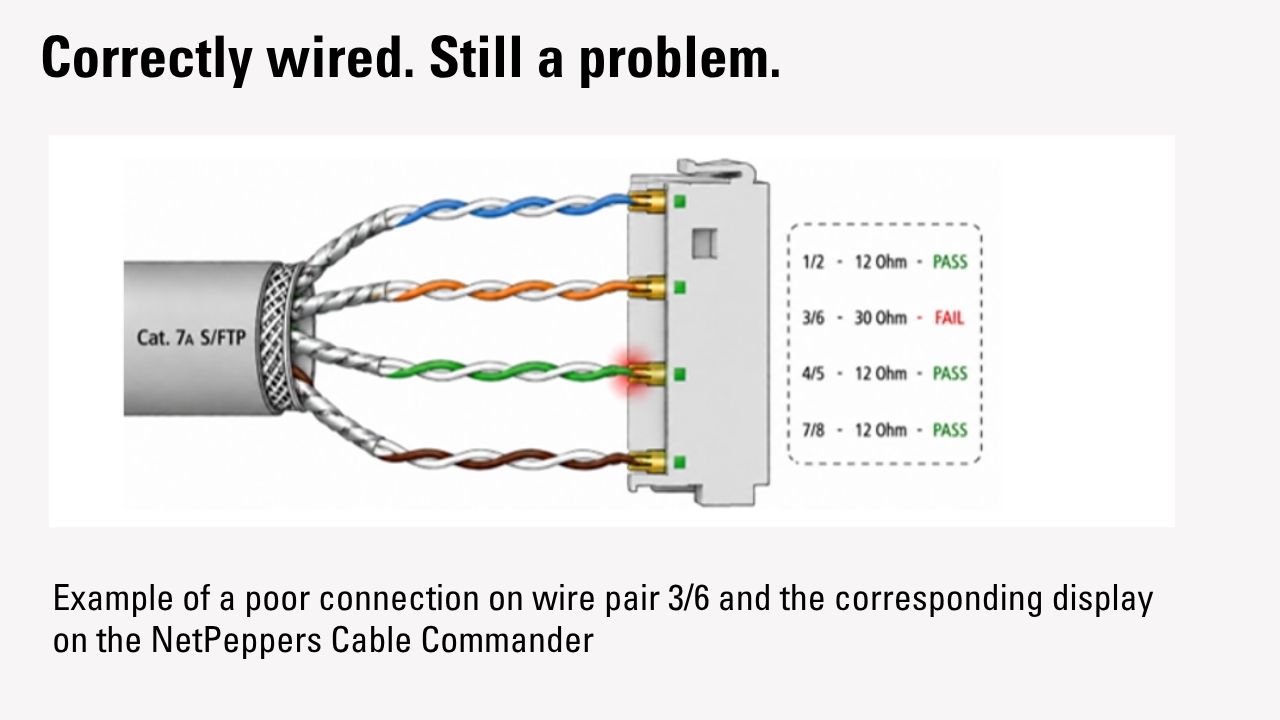
From Cable Testing to a Documented Measurement Process
The fundamental task remains the same: installed copper cabling must be tested and potential faults identified. What has changed is the level of detail these tests can provide and how the results can subsequently be used.
Modern cable testers can display wiring faults graphically and identify affected individual conductors. Depending on the functional level, additional capabilities include length measurement, PoE testing and resistance measurement. At the same time, test results can be digitally assigned to projects, stored, synchronized and documented.
This development therefore affects two areas: the depth of analysis and the further processing of test results.
The key question is no longer: Which cable tester offers the most features?
Instead, it is: What information do I need for my installation, and what needs to happen with the results afterward?
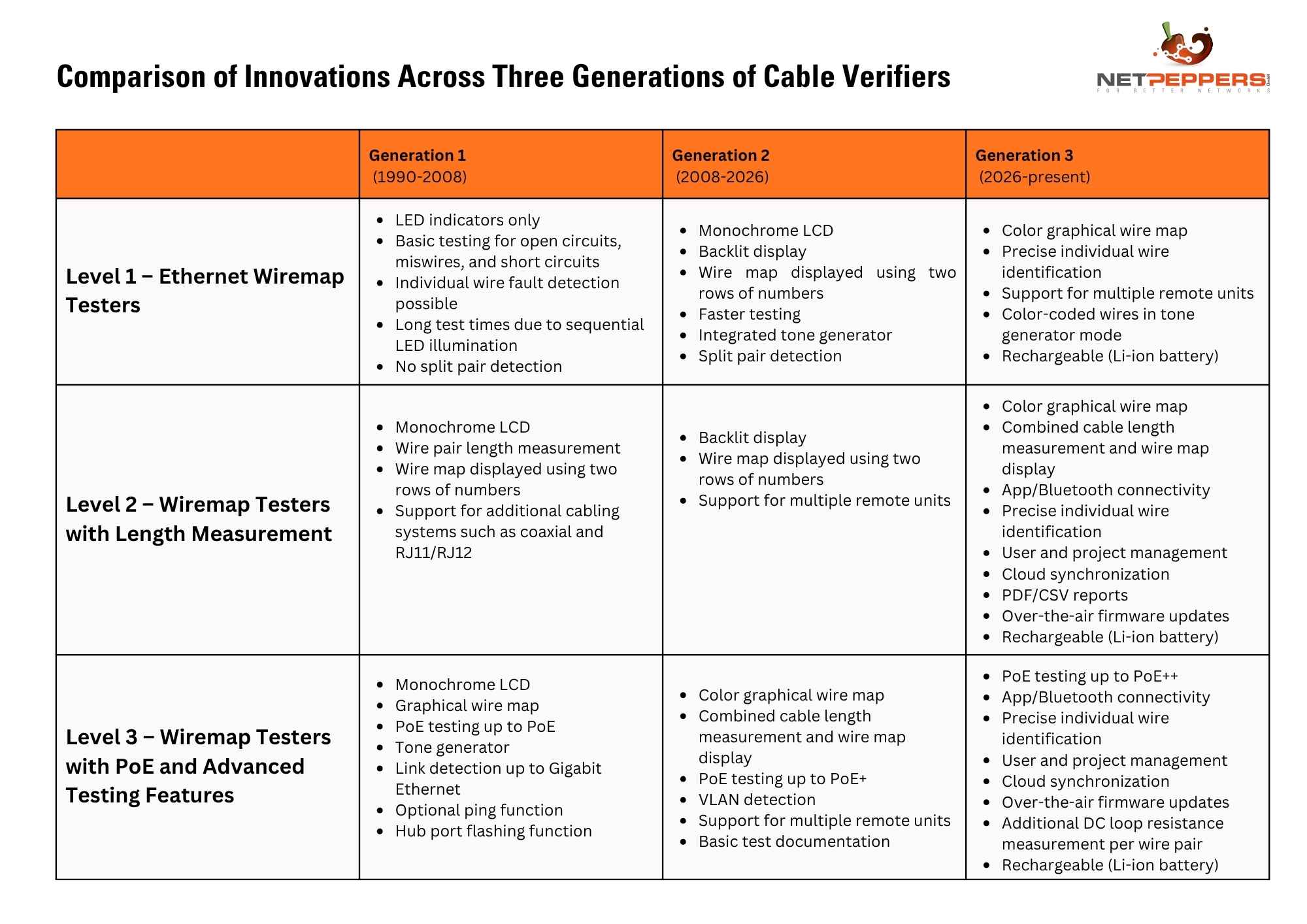
How have cable testers evolved over the past decades? From simple LED indicators to graphical wiremaps with advanced measurement and documentation functions. Our comparison table provides an at-a-glance overview of the most important innovations across three device generations. Download the comparison table here.